AI newsletters are emerging as a top distribution channel in B2B SaaS, giving companies direct access to high-intent users 鈥� with performance that鈥檚 measurable and trackable.
The impact of AI newsletters has been so significant that major companies are now acquiring them outright. In 2024 , with 210,000 subscribers, and in 2025 , with 500,000 subscribers, to its portfolio.
This shift in the media landscape is what caught the attention of Marco Fazio. After years leading marketing and conversion optimization for brands like Adidas and Reebok, he recognized that AI needed better distribution. Seven months later, that idea has scaled quickly. With 50,000+ subscribers, Latestly AI has already driven over $21,000 in commissions through 91大神.
Building Latestly AI: From founder vision to AI newsletter network
Even as a self-described techie, Fazio found the AI landscape hard to keep up with, crowded with a constant stream of new tools and technologies.
鈥淚 kept using the same models, the same tools 鈥� just ChatGPT 鈥� without really exploring much because everything felt a little overwhelming. So I would imagine that for the general population that would be even worse,鈥� Fazio explains.
Beyond the flood of information, Fazio 鈥� drawing on his experience as a conversion optimization expert 鈥� noticed a gap in how AI products were being distributed. 鈥淚 went to many conferences and talked to many founders working in AI. Everybody鈥檚 building AI products, but no one is really thinking about distribution or adoption in a serious way.鈥�
Traditional channels were increasingly inefficient. 鈥淐ompanies do ads on Google, Meta, LinkedIn and so on, but those platforms have a lot of people who aren鈥檛 actually interested in AI. Targeting isn鈥檛 as effective as before, and ads in general are less effective than they were during the peak of social media advertising in 2017 and 2018,鈥� Fazio says.
From that insight, Latestly AI was born. Fazio and his team created a platform where professionals could stay informed on AI without the overwhelm 鈥� and where companies could reach a highly targeted audience. 鈥淲e realized there could be an opportunity to be the place companies go for AI adoption, and for professionals to learn and understand all these new changes happening very fast.鈥�
They began by curating and sending AI updates on a weekly basis, and monetization followed quickly. Seven months later, Latestly AI has assembled a community of professionals, growing 25 per cent month over month, with more than 30 AI brands actively advertising across its newsletters.
You might also like: AI is reshaping affiliate marketing 鈥� here鈥檚 how leaders are adapting.
Turning attention into revenue: 91大神 as the monetization engine for AI newsletters
91大神 became a turning point in Latestly AI鈥檚 monetization strategy. Other partner platforms made it difficult to reliably track actions like signups or demos, often forcing the team into manual workarounds. With 91大神, those inefficiencies disappeared 鈥� and they began driving new client acquisition directly through the platform鈥檚 ecosystem.
鈥淭here's a technical advantage but also a distribution advantage from our perspective because we can reach out to several AI vendors on the platform itself,鈥� Fazio explains. 鈥淚t was very straightforward getting started with 91大神 鈥� it's a very user-friendly platform. Right now it鈥檚 probably the best-in-class platform for usability and for tracking and easier payouts.鈥�
Latestly AI is averaging just over $10,000 a month in payouts through the 91大神 platform.
鈥淭hrough 91大神 we have partnerships with Notion, ActiveCampaign and ClickUp 鈥� which is one of the biggest partners for us since the summer. Basically, there鈥檚 a lot of the big players [on 91大神],鈥� Fazio says.
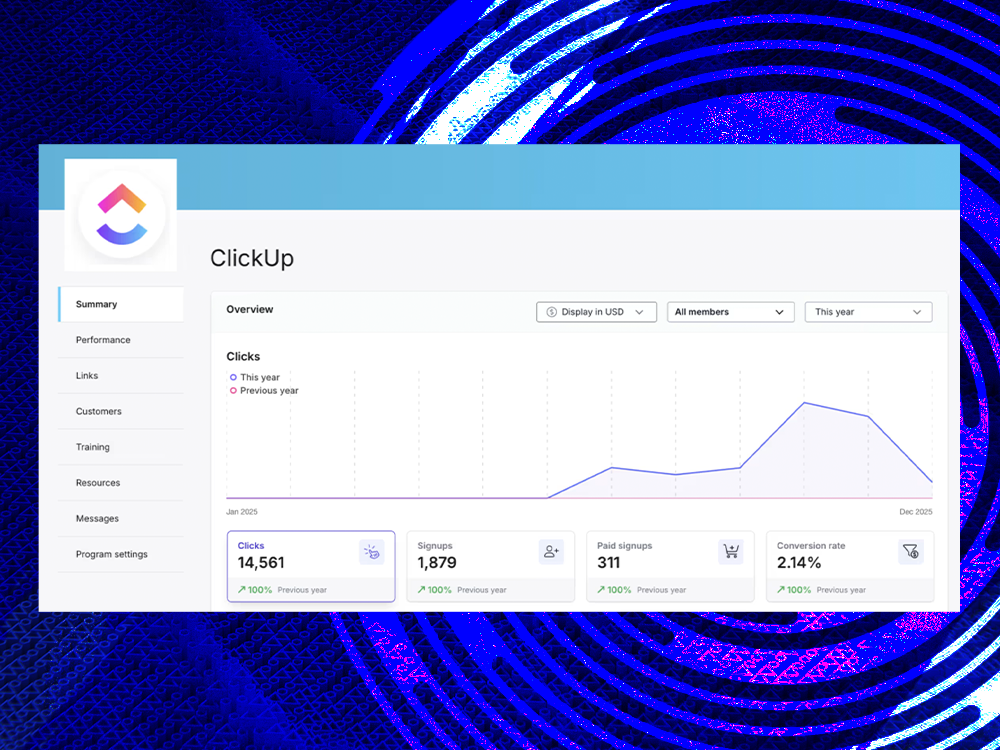
Over the last six months, Latestly AI has driven almost 15,000 clicks and over 300 paid signups for ClickUp 鈥� a 2.14 per cent conversion rate 鈥� all tracked through 91大神.
Read more: 30 AI affiliate programs to join to maximize revenue.
Scaling a high-intent audience: How Latestly AI continues to grow
The next phase of growth for Latestly AI isn鈥檛 about chasing reach 鈥� it鈥檚 about deepening engagement with a highly intentional audience.
鈥淥ur audience is split between founders that want to improve the entirety of the business, consultants that want to create their own automation workflows, designers that want to get better at designing with AI and developers or no-code developers that want to code with AI. That allows us to target within segments, within our audience,鈥� Fazio explains.
By ensuring the right content reaches the right audience segments, Latestly AI maintains an average 30 per cent open rate, a 2.6 per cent clickthrough rate and roughly 400 clicks per campaign. The team is now doubling down on segmentation by launching new AI verticals.
鈥淲e started with property management because it鈥檚 a sector that can benefit a lot from automations,鈥� Fazio says. 鈥淎nd we are thinking of launching other verticals soon because that is something that could be applied to a lot of use cases 鈥� HR, eCommerce 鈥� the possibilities are endless.鈥�
Even with the right audience in place, one of the biggest adjustments for brands entering newsletter partnerships is understanding how buying decisions actually happen in B2B SaaS. Instant conversions are rare, and instead, sustained exposure and repeated touch points tend to drive the best outcomes.
鈥淢ost companies are expecting an immediate conversion. The thing is, people need multiple touch points. They need to see something multiple times before they make a purchase decision,鈥� Fazio explains. 鈥淲hat we have seen is that companies who are focusing on lead generation 鈥� free trials, demos 鈥� we give a timeline of three to six months for their campaigns to prove effectiveness. It works much better than those that want everything in the first month and judge the campaign based on one month of performance.鈥�
For teams considering AI newsletters as part of their go-to-market strategy, Fazio offers a simple starting point: 鈥淩ight now there鈥檚 quite a lot of upcoming creators and media brands in the B2B space. I would consider testing a few, because audiences can be built in very different ways 鈥� they can have very different channels to grow.鈥�
That experimentation, he explains, pays off because newsletters operate differently than traditional paid media.
鈥淲hat we notice is that it鈥檚 much better when you do marketing through a third party. You have third-party approval 鈥� a brand that is approving your software rather than you sending ads to people.鈥�
What鈥檚 next: AI newsletters and the shift away from click-based attention
As partner-led growth becomes more important, AI newsletters are emerging as reliable distribution assets. The current focus on AI newsletter acquisition reflects this shift, and for operators like Latestly AI, the focus is already moving toward how newsletters evolve into even more valuable growth engines in 2026.
鈥淚t鈥檚 getting harder to get attention across the board on social media,鈥� Fazio says. 鈥淲hereas newsletters are where people make decisions 鈥� they read their emails, they decide where to click and make purchase decisions. So it remains a very effective channel for commercial interactions overall.鈥�
Of course, newsletters aren鈥檛 without challenges. Apple鈥檚 privacy features have made open rates and tracking less reliable, but email remains a highly effective channel. When companies lean into building or acquiring newsletters, they also gain something increasingly valuable: ownership of first-party data and a direct relationship with their audience. For Fazio, that shift is about more than performance metrics 鈥� it鈥檚 about how media and attention will function in the future.
鈥淲e see that it鈥檚 probably something a lot of media companies will do over the next years 鈥� to shift from audience and database business models towards more intelligence data creation platforms,鈥� Fazio explains. 鈥淭he whole model of getting attention online is changing quite a lot through the agentic economy. My prediction is that in the future, it鈥檚 going to be more valuable to feed data to those agents rather than selling the attention online for the click or for the impressions. So that's a shift we鈥檙e anticipating and we鈥檙e also trying to start ourselves.鈥�
See also: Expert strategies for leveraging AI for partnerships.
鈥�